گیاه پزشکی

گیاه پزشکی

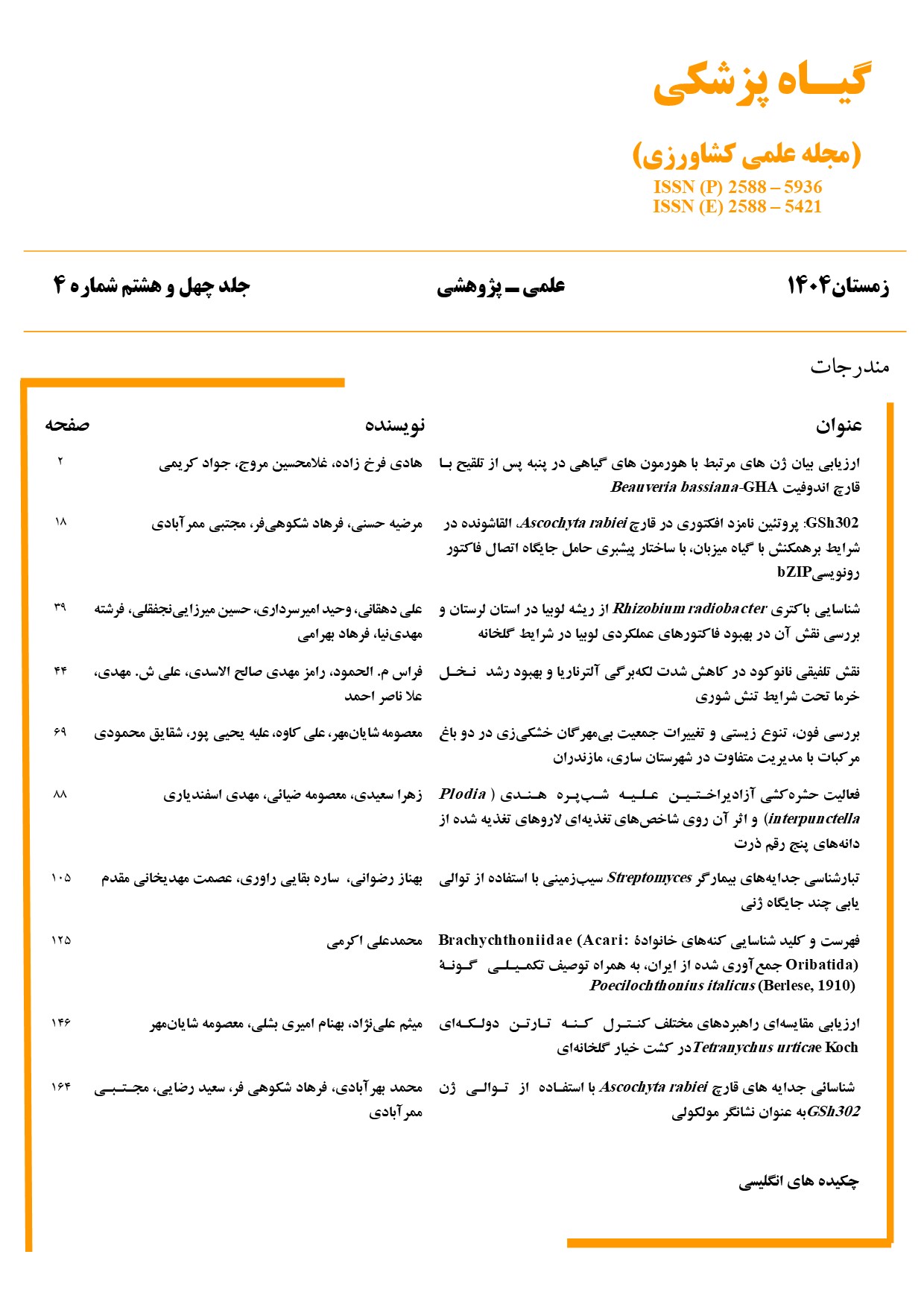
شناسایی باکتری Rhizobium radiobacter از ریشه لوبیا در استان لرستان و بررسی نقش آن در بهبود فاکتورهای عملکردی لوبیا در شرایط گلخانه

نوع مقاله : علمی پژوهشی-فارسی

نویسندگان
1 استادیار، مرکز تحقیقات و آموزش کشاورزی و منابع طبیعی لرستان، سازمان تحقیقات، آموزش و ترویج کشاورزی، خرم آباد، ایران
2 دانش آموخته دوره کارشناسی ارشد، گروه گیاهپزشکی، دانشکده کشاورزی، دانشگاه لرستان
3 استادیار گروه گیاه‌پزشکی، دانشکده کشاورزی، دانشگاه لرستان، لرستان، ایران
4 دانشجوی دوره دکتری، گروه گیاه پزشکی، دانشکده کشاورزی، دانشگاه لرستان، خرم آباد، ایران
چکیده
ریزوبیوم‌ها به عنوان منبع اصلی تولید کودهای زیستی، نقش حیاتی در تثبیت نیتروژن و بهبود حاصلخیزی خاک ایفا می‌کنند و به کاهش وابستگی به کودهای شیمیایی کمک کنند. گونه Rhizobium radiobacter به دلیل توانایی‌اش در افزایش مقاومت گیاهان به عوامل بیماری‌زا و تحمل به تنش‌های محیطی، مورد توجه ویژه‌ای قرار گرفته است. این پژوهش به بررسی تنوع ژنتیکی و شناسایی جدایه‌های برتر این گونه در تأمین نیتروژن، تقویت میزبان و افزایش عملکرد دانه در لوبیا می‌پردازد. برای این منظور، نمونه‌برداری از ریشه بوته‌های لوبیا در مناطقی از زاگرس صورت گرفت. پس از جداسازی و خالص‌سازی جدایه‌ها، آزمون‌های فنوتیپی-بیوشیمیایی برای غربالگری اولیه انجام شد. تنوع ژنتیکی با استفاده از واکنش زنجیره‌ای پلی‌مراز (PCR)  تعیین و تحلیل نتایج با نرم‌افزار Ntsys-pc version 2.02 انجام شد. کارایی همزیستی جدایه‌های شناسایی شده در شرایط گلخانه بر روی ارقام لوبیا اختر و صیاد مورد بررسی قرار گرفت. در مجموع 14 جدایه R. radiobacter  شناسایی شد. نتایج PCR  و آنزیم‌های برشی نشان‌دهنده باندهای مشخصی در محدوده 150 تا 2000 جفت بازی بود. تجزیه و تحلیل تنوع ژنتیکی نشان‌دهنده تفاوت‌های قابل توجهی بود. همچنین، نتایج تجزیه واریانس کارایی همزیستی جدایه‌ها نشان‌دهنده اختلاف معنی‌دار در تعداد و وزن گره‌ها، وزن اندام‌های هوایی و میزان تثبیت نیتروژن بود. آزمون‌های فنوتیپی افتراقی به عنوان روشی سریع و مؤثر برای شناسایی R. radiobacter  و تکنیک  ARDRA Amplified Ribosomal DNA Restriction Analysis به عنوان ابزاری مناسب برای بررسی تنوع ژنتیکی این گونه‌ها پیشنهاد می‌شود.
کلیدواژه‌ها
موضوعات

عنوان مقاله English

Identification of Rhizobium radiobacter from Bean Roots in Lorestan Province and its Role in Improving Bean Yield Factors under Greenhouse Conditions

نویسندگان English

A. Dehghani 1
V. Amir Sardari 2
H. Mirzaei Najafgholi 3
F. Mehdinia 4
F. Bahrami 2
1 Assistant Professor, Plant Protection Department, Lorestan Agricultural and Resources Research and Education Center, Khoramabd, Iran
2 M. Sc. graduate, Department of Plant Protection, Faculty of Agriculture, Lorestan University, Khorramabad, Iran
3 Assistant Professor, Department of Plant Protection, Faculty of Agriculture, Lorestan University, Khorramabad, Iran
4 Ph.D. student, Department of Plant Protection, Faculty of Agriculture, Lorestan University, Khorramabad, Iran
چکیده English

Background and Objective
Legumes, particularly beans, are crucial to food security and soil health. The crops account for approximately 50% of global legume production and are fundamental in meeting the food needs of various societies. Rhizobium bacteria, known for their nitrogen-fixing abilities, serve as valuable symbionts to leguminous plants. As the primary source of biofertilizers, Rhizobium plays a vital role in nitrogen fixation, enhances soil fertility, and helps reduce dependence on chemical fertilizers. The Rhizobium radiobacter aids plants in resisting environmental stresses. This study aims to identify and investigate the phenotypic and genetic diversity of Rhizobium isolates, addressing the limited research on the diversity of these bacteria in the soils of the Middle Zagros region.
Materials and Methods
The bean roots were sampled during the summer flowering stage from the cities of Aleshatar, Azna, Aligudarz, Beyranshahr, and Khorramabad. The samples were transferred to the plant pathology laboratory, where the surfaces of the roots and nodes were washed, and a bacterial suspension was prepared. Subsequently, bacterial isolation was performed on the YEMA culture medium. Phenotypic, biochemical, and nutritional tests were employed to identify the bacteria accurately. Additionally, to enhance the identification accuracy, the 16S rDNA region was amplified and sequenced. Ribosomal DNA restriction enzymes were employed to study diversity at the nucleotide level. This study investigates genetic diversity and identifies superior isolates of this species concerning nitrogen supply, host enhancement, and grain yield increase in beans. Sampling was conducted from the roots of bean plants in the Middle Zagros regions. After the isolation and purification of the isolates, phenotypic-biochemical tests were performed for initial screening. Genetic diversity was determined using polymerase chain reaction (PCR), and the results were analyzed using Ntsys-pc version 2.02 software. The symbiotic efficiency of the identified isolates was investigated under greenhouse conditions using the Akhtar and Sayyad bean cultivars. A total of 14 isolates of R. radiobacter were identified and analyzed for their effectiveness in promoting plant growth and health.
Results
A total of 14 bacterial isolates of R. radiobacter were identified. The bacterial isolates of R. radiobacter were identified as gram-negative, oxidase-positive, and catalase-positive. These obligate aerobic organisms could grow on culture media containing 3% salt. The isolates demonstrated positive results in Tween 80 hydrolysis, esculin hydrolysis, alkalinization of Litmus Milk, levan production, and ketolactose production. However, they were negative for starch hydrolysis, gelatin hydrolysis, nitrate reduction, indole production, and fluorescent dye tests. Isolate Rb194 exhibited a 100% identity to the R. radiobacter species. The analysis of ARDRA using HpaII and RsaI enzymes demonstrated the genetic diversity among the isolates. During a greenhouse experiment aimed at investigating the efficiency of symbiosis with two bean cultivars, the results were as follows: for the Akhtar cultivar, isolates Rb180, Rb184, and Rb187 exhibited the highest efficiency of symbiosis, with the highest shoot dry weight attributed to isolate Rb187.
Additionally, isolates Rb182, Rb189, and Rb190 could not produce nodules. For the Sayyad cultivar, isolates Rb180 and Rb182 produced the highest shoot dry weight; notably, the symbiotic efficiency of Rb180 exceeded 100%, while isolates Rb189 and Rb190 could not produce nodules. The PCR and restriction enzyme analysis results revealed distinct bands ranging from 150 to 2000 base pairs.
Discussion
The rhizobium isolates exhibited significant phenotypic and genetic diversity. The observed differences may be attributed to various environmental factors. The differing efficiency of the isolates in symbiosis with bean plants underscores the importance of the genetic diversity of these bacteria. Genetic diversity analyses revealed substantial differences. Furthermore, the results of the variance analysis regarding the symbiotic efficiency of the isolates demonstrated significant differences in the number and weight of nodules, shoot weight, and nitrogen fixation rates. Differential phenotypic tests are proposed as a rapid and effective method for identifying R. radiobacter. The ARDRA technique is highlighted as a suitable tool for investigating the genetic diversity of these species. Genetic diversity directly correlates with nitrogen fixation ability, climatic conditions, and bacterial activity.

کلیدواژه‌ها English

Keywords: Akhtar cultivar
Nitrogen fixation
Rhizobium
ARDRA technique
Avis, J. C. (2004). Molecular markers, natural history and evolution. Sinauer associates inc publishers, massachusetts, The Sunderlands, 541, 321- 367.
Asadi Rahmani, H., Rasanen, L. A., Afshari, M., & Lindstrom, K. (2011). Genetic diversity and symbiotic effectiveness of rhizobia isolated from root nodules of Phaseolus vulgaris L. grown in soils of Iran. Applied Soil Ecology, 48, 287-293. https://doi.org/10.1016/j.apsoil.2011.04.010
Ashraf, M., Ahmad, M., & Bakush, H. M. (2006). Efficacy of Rhizobium strains for groundnut inoculation under rainfed conditions. Pakistan Journal of Agriculture Science, 43, 122-125.
Blair, M.W., Astudillo, C., Grusak, M.A., Graham, R. & Beebe, S. E. (2009). Inheritance of seed iron and zinc concentrations in common bean Phaseolus vulgaris L. Molecular Breeding, 23, 197-207. https://doi.org/10.1007/s11032-008-9225-z
Ciancio, A., Pieterse, C. M. G. & Mercado-Blanco, J. (2016). Editorial: Harnessing useful rhizosphere microorganisms for pathogen and pest biocontrol. Frontiers in Microbiology, 7, 16-20. https://doi.org/10.3389/fmicb.2019.01935
Clarridge, J. E. (2004). Impact of 16S rRNA gene sequence analysis for identification of bacteria on clinical microbiology and infectious diseases. Clinical Microbiology Review, 17, 840–862. doi: 10.1128/CMR.17.4.840-862.2004
Dye, D. W. (1969). A taxonomic study of the genus Erwinia .II. The carotovora group’s New Zealand Journal of Science, 12, 81-97.
Esmaili, M., & Maarefat, A. (2015). Identification of soil inhabiting bacteria in Qazvin province vineyards and investigation of their inhibitory effect on Rhizobium vitis, the causal agent of grape root and crown gall. Plant Protection (Scientific Journal of Agriculture), 38(1), 79-90.
 Frank, J. A., Reich, C. I., Sharma, S., Weisbaum, J. S., Wilson, B. A., & Olsen, G. J. (2008). Critical evaluation of two primers commonly used for amplification of bacterial 16S rRNA genes. Applied and Environmental Microbiology, 74, 2461-2470. doi: 10.1128/AEM.02272-07
Glickmann, E., & Dessaux, Y. (1995).  A critical examination of the specificity of the Salkowski reagent for indolic compounds produced by phytopathogenic bacteria. Applied and Environmental Microbiology, 61, 793–796.
Jiménez-Fernández, D., Navas-Cortés, J. A., Montes-Borrego, M., Jiménez-Díaz, R. M., & Landa, B. B. (2011). Molecular and pathogenic characterization of Fusarium redolens, a new causal agent of Fusarium yellows in chickpea. Plant Disease, 95, 860-870. https://doi.org/10.1094/PDIS-12-10-0946
Jonasson, J., Olofsson, M., & Monstein, H. J. (2002). Classification, identification and subtyping of bacteria based on pyrosequencing and signature matching of 16S rRNA fragments. Journal of Pathology, Microbiology & Immunology, 110, 263-272.
Kovacs, N. (1956). Identification of Pseudomonas pyocyanea by the oxidase reaction. Nature, 178, 703-712.
Kumar, S., Stecher, G., Li, M., Knyaz, C., & Tamura, K. (2018). MEGA X: Molecular evolutionary genetics analysis across computing platforms. Molecular Biology and Evolution, 35, 1547-1549. doi: 10.1093/molbev/msy096
Liu, Y., Wu, L., Baddeley, J. A. & Watson C. A. (2011). Models of biological nitrogen fixation of legumes. A review. Agronomy for Sustainable Development, 31, 155–172. doi: 10.1051/agro/2010008
Liu, H., Carvalhais, L. C., Crawford, M., Singh, E., Dennis, P. G., Pieterse, C. M. and Schenk, P. M. (2017). Inner plant values: diversity, colonization and benefits from endophytic bacteria. Frontiers in Microbiology, 8, 25-52. https://doi.org/10.3389/fmicb.2017.02552
Mabrouk, Y., & Belhadj, O. (2010). The potential use of Rhizobium-Legum symbiosis for enhancing plant growth and management of plant disease. Microbes for legum improvement. New York, Springer Wien, 240, 112- 129. https://doi.org/10.1007/978-3-211-99753-6_20
Maniatis, T., Fritsch, E. F., & Sambrook, J. (1982). Molecular cloning, A laboratory manual. Cold Spring Harbor Laboratory, New York., 1659, 1176-1186.
Messina, V. (2014). Nutritional and health benefits of dried beans. American society for nutrition.  American Journal of Clinical Nutrition, 512, 437- 442. doi:10.3945/ajcn.113.071472
Mila, A. L., Carriquiry A. L. & Yang, X. B. (2004). Logistic regression modeling of prevalence of soybean sclerotinia stem rot in the northcentral region of the United States. Journal of Phytopathology, 94, 102-110. doi: 10.1094/PHYTO.2004.94.1.102
Mirzaei Najafgholi, H., Hasanvand, E., Pakbaz, S., & Rouhani, N. (2023). Investigating effective factors in improving plant growth by native phosphate-dissolving bacteria isolated from wheat. Journal of Genetic Resources, 145, 71-82. doi:10.22080/jgr.2023.25663.1364
Moazzenpour, N., Yahyaabadi, S., & Doudi, M. (2018) Three-Rhizobia Screening On the amount of photosynthetic pigments of The Cowpea (Vigna Unguiculata) Plant Which Was Under Nickel Stress. Journal of Modern Cellular and Molecular Biotechnology, 9 (33), 49-60. http://ncmbjpiau.ir/article-1-1163-fa.html
Mousavi, S. A. (2016). Revised taxonomy of the family Rhizobiaceae, and phylogeny of mesorhizobia nodulating Glycyrrhiza spp. Academic dissertation, department of food and environmental sciences. University of Helsinki Finland. 231, 34- 46. http://hdl.handle.net/10138/162736
Mishra, R. P. N., Singh, R. K., Jaiswal, H. K., Kumar, V., & Maurya, S. (2006). Rhizobium mediated induction of phenolics and plant growth promotion in rice (Oryza sativa L.). Current Microbiology, 52, 383–389. doi: 10.1007/s00284-005-0296-3
Ozede Igiehon, N., & Babalola, O. O. (2018). Rhizosphere microbiome modulators: contributions of nitrogen fixing bacteria towards sustainable agriculture. International Journal of Environmental Research and Public Health, 15, 574-599. doi: 10.3390/ijerph15040574
Ribeiro, S., Crawford, M., Singh, E., & Dennis, P. (2013). Novel Rhizobium lineages isolated from root nodules of the common bean (Phaseolus vulgaris L.) in Andean and Mesoamerican areas. Research in Microbiology, 164, 740-748. https://doi.org/10.1016/j.resmic.2013.05.002
Schaad, N. W., Jones, J. B., & Chun, W. (2001). Laboratory guide for identification of plant pathogenic bacteria. 3rd edit. New York: American Phytopathology Society Press, 5, 309-315.
Sogut, T. 2006. Rhizobium inoculation improves yield and nitrogen accumulation in soybean (Glycine max L.) cultivars better than fertilizer. New Zealand Journal of Crop and Horticultural Science, 34, 115-120.
Suslow, T. V., Schorth, M. N. & Isaka, M. (1982). Application of a rapid method for gram differentiation of plant pathogenic and saprophytic bacteria without staining. Phytopathology, 72, 917-918.
Youseif, S. H., Abd El-Megeed, F. H., Ageez, A., Cocking, E, C. & Saleh, S.A. (2014). Polygenetic multilocus sequence analysis of native rhizobia nodulating faba bean (Vicia faba L.) in Egypt. Systematic and Applied Microbiology, 37, 560-569.
Velazquez, A., Cocking, E, C. & Saleh, S.A. (2005). The coexistence of symbiosis and pathogenesity-determining genes in Rhizobium rhizogenes strains enables them to induce nodules and tumors or hairy roots in plants. Molecular Plant-Microbe Interactions, 18, 1325-1332. doi: 10.1094/MPMI-18-1325
Vinuesa, P., Rademaker, J., De Bruijn, F, J. & Werner, D. (1998). Genotypic characterization of Bradyrhizobium strains nodulating endemic woody legumes of the canary islands by PCR-restriction fragment length polymorphism analysis of genes encoding 16S rRNA (16S rRNA) and 16S-23S rDNA intergenic spacers, repetitive extragenic palindromic PCR genomic fingerprinting, and partial 16S rRNA sequencing. Applied and Envirnmental Microbiology, 64, 2096–2104.
Weir, B. S., Turner, S. J., Silvester, W. B., Park, D. C., & Young, J. M. (2004). Unexpectedly diverse Mesorhizobium strains and Rhizobium leguminosarum nodulate native legume genera of New Zealand, while introduced legume weeds are nodulated by Bradyrhizobium species. Applied and Environmental Microbiology, 70, 5980–5987.
Willems, A. (2006). The taxonomy of rhizobia: an overview. Plant and soil, 287, 3-14. doi.org/10.1007/s11104-006-9058-7
Wolde-meskel, E., Terefework, Z., Frostegard, A., & Lindstrom, K. (2005). Genetic diversity and phylogeny of rhizobia isolated from agroforestry legume species in southern Ethiopia. International Journal of Systematic and Evolutionary Microbiology, 8, 1439–1452. doi: 10.1099/ijs.0.63534-0
 © 2026 by the authors. Licensee SCU, Ahvaz, Iran. This article is an open access article distributed under the terms and conditions of the Creative Commons Attribution-NonCommercial 4.0 International (CC BY-NC 4.0 license) (http://creativecommons.org/licenses/by-nc/4.0/.